Navigating a foreign city can be among the most gratifying—and occasionally most challenging—aspects of international travel. Public transit usually offers the most affordable, genuine approach to discover whether you are a budget-conscious traveler, a solitary backpacker, or someone trying to maximize every trip dollar. Mastering this aspect of your trip calls for forethought, adaptability, and thorough knowledge of travel hacks, travel safety advice, and travel planning advice.
We will discuss in this post how to negotiate public transportation abroad like an expert, considering the benefits and drawbacks of different approaches and providing practical advice to guarantee safe, effective, and economical city movement.
1. Study Transportation Choices Before You Arrive
Every city has its own system—subways, buses, trams, ferries, ride-shares, and even bicycles. Travel planning advice begins with study:
- Websites or apps of local transit authorities
- Systems of transit cards—e.g., London’s Oyster Card, Tokyo’s Suica Card
- City-specific travel bargains or transportation passes
Compromise: Though it might compromise flexibility, planning ahead saves time and money. Not all cities release current information in English, so apps like Rome2Rio, Moovit, and Google Maps are rather useful.
2. Buy a City Card or Transit Pass.
Many cities provide travel cards good for a specified number of days with unrestricted access to buses, trams, or subways. Often, these come with attraction discounts, which makes them perfect for frugal travel.
Budget travel advice: Look at daily ticket prices to pass pricing. A pass might provide notable discounts if you want to travel several times each day.
Tradeoff: If you don’t use transit frequently or generally walk, passes may be more costly. Examine your schedule first.
3. Navigate Routes Using Transit Apps
Public transportation is made easier than ever by smartphones. Local transit apps, Google Maps, and Citymapper provide real-time timetables, route choices, delays, and fare predictions.
Travel hack: Especially if you won’t have data access abroad, download maps for offline use. Station names in the native language captured as screenshots can also be lifesavers.
Real-time information lowers the likelihood of being lost; hence, it improves safety and confidence.
4. Know Local Customs and Etiquette
Every nation has varying standards for conduct on public transportation. Japan values quiet; Europe values ticket validation. In many Latin American nations, buses could not stop unless called down.
Travel safety advice: By watching native behavior, you may blend in and avoid attracting notice as a tourist, hence lowering the possibility of scams or pickpocketing.
Travel packing advice: On busy buses or trains, a cross-body bag with RFID protection is a smart option.
5. Expect Language Barriers
Navigating strange systems might be greatly hampered by language. Maps, announcements, and signs might not be in English.
Travel advice and tricks: Read signage using camera mode on translation applications such as Google Translate. Know important phrases like “Where is the station?” instead of “What is the fare?”
Tradeoff: Understanding routes or directions could take more time, so plan a buffer into your schedule—particularly if you’re catching flights or trains.
6. Remain Safe While Traveling
Particularly if you’re alone or traveling at night, safety is essential.
- Stay with well-lit stations.
- Steer clear of vacant railcars.
- Be aware of your possessions—especially wallets and smartphones.
Advice on travel safety: Study which lines or areas to stay away from after dark. In many nations, women-only vehicles are offered for safer travel.
7. Travel Light for Simpler Mobility
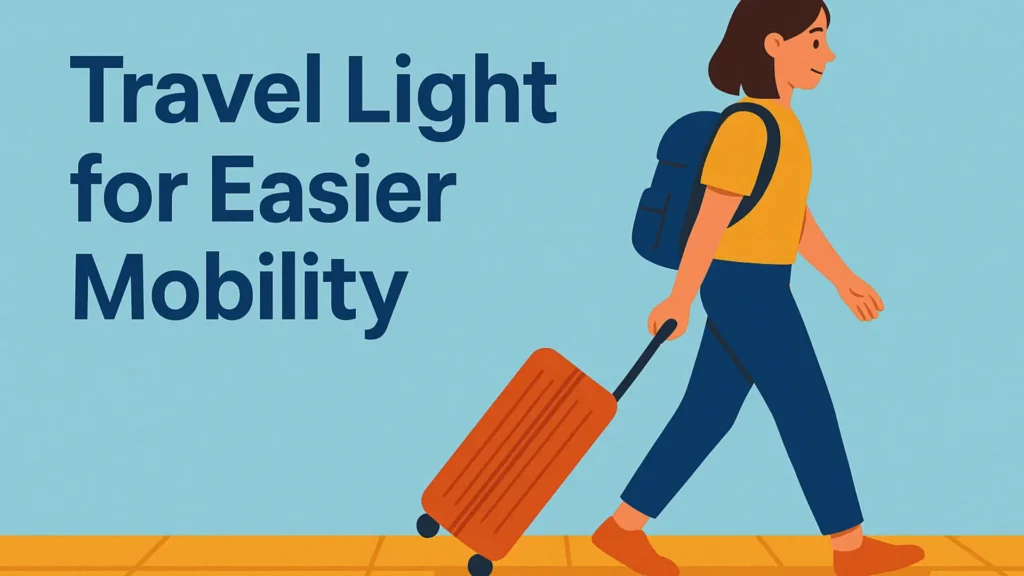
Heavy bags can add stress to transit, particularly on escalators, stairs, or packed cars.
Travel packing advice: Choose a wheeled carry-on or backpack that is simple to move. Be safe, but keep vital goods like passports, cash, and water close at hand.
Traveling light increases your mobility and lowers stress if you are alone and have no one to assist with luggage.
8. Request assistance, but exercise caution.
Especially when asked nicely, locals are usually glad to help. Route advice may come from station personnel, other travelers, or hostel staff.
Travel tip: To prevent pronunciation problems, have your destination noted in the local language. Always check advice from strangers using apps or signs.
Tradeoff: Although too trusting relationships can endanger travelers, asking for aid can help to clear any uncertainty. When feasible, depend on official staff members.
9. Weigh convenience against cost.
While not always the quickest, public transit is usually the most affordable. In some situations—especially late at night or for shorter distances—taxis, ride-sharing companies, or even walking may be preferable.
Cheap flights usually drop passengers at airports distant from city cores. In such situations, trains or airport buses provide the highest value.
When creating your itinerary, think about transportation time. Depending on your budget and time limits, a lengthier ride at half the price could still be worthwhile.
10. Be Flexible and Patient
Delays, linguistic misunderstandings, and changes in routes could all occur. Staying calm and flexible is absolutely crucial.
Travel essentials: Keep snacks, water, a power bank, and offline maps in your daypack for emergencies or lengthy journeys.
Public transportation systems are not ideal, which makes using them difficult. Delays or failures could necessitate adjustments to your timetable. A seasoned traveler is characterized by flexibility.
Final Reflections: A Window into Local Life, Public Transport
Traveling from point A to B is only one aspect of navigating public transportation in other places. It’s a cultural experience that lets tourists see daily living, save money, and travel effectively. Anyone can navigate through even the most complicated systems like a local by using travel hacks, knowing travel safety advice, and smart budget travel strategies to plan ahead.
Public transportation is a necessary tool in your worldwide trip toolbox whether you are traveling alone, pursuing low-cost flights, or simply wanting to discover more with less.